Since COVID, several of these incumbents have seen their stock prices stagnate. Interestingly, the 50 share Nifty index is very different from the time that it was launched in 1996. With 38 changes in last 28 years only 8 companies of the original 50 constituents are still in the index. As businesses reimagine possibilities, India’s digital economy is set to triple by 2030, crossing USD 1trn. This newsletter explores how this rapid evolution affects consumers, reshapes industries, and drives businesses toward bold, tech-led transformations. At Ambit Asset Management, across our portfolios we have embraced the digital wave by investing in several successful adopters and disruptors.
1. India – Emerging as global leader in digital transformation
India is fast emerging as a global leader in digital transformation as measured by the number of UPI users, growth in digital transactions, number of hours spent on internet consuming content, number of social media accounts.
- Indians spend an average of 7.3 hours daily watching videos, reading news, or listening to music—a figure higher than the US (7.1) and China (5.3).
- India’s voice search usage is double the global average, and the country leads the world in monthly Google Lens users.
- The online marketplace is thriving with 1.1mn sellers offering over 100mn products across 30 categories on platforms like Meesho.
- Digital banking and investment tools are gaining traction. Monthly SIP inflows increased from USD1.9bn in 2023 to USD3.9bn in the first half of 2024.
- Online resources play a significant role in skill development, with ~85% of India’s 468mn video users leveraging YouTube to learn or enhance skills. Four out of five users explore the platform for new knowledge.
- Indians maintain an average of 11 social media accounts per person, making them highly active in connecting through social platforms, instant messaging, and email.
- From buying goods to booking services like travel and rentals, e-commerce is a staple. Quick commerce is growing rapidly, with a leading player processing 600,000 orders daily.
Affordable smartphones and data have unlocked opportunities for businesses to innovate and consumers to embrace digital-first lifestyles. From online retail and content consumption to quick commerce and personalized financial tools, digital adoption is rewriting consumer behavior at an extraordinary pace. Traditional businesses, once resistant to change, now face mounting pressure to adapt or risk obsolescence.
As businesses reimagine possibilities, India’s digital economy is set to triple by 2030, crossing USD 1trn. The Digital India story is one of transformation, ambition, and resilience—a story of a nation boldly embracing the future.
Exhibit 1: Internet users/penetration across geographies
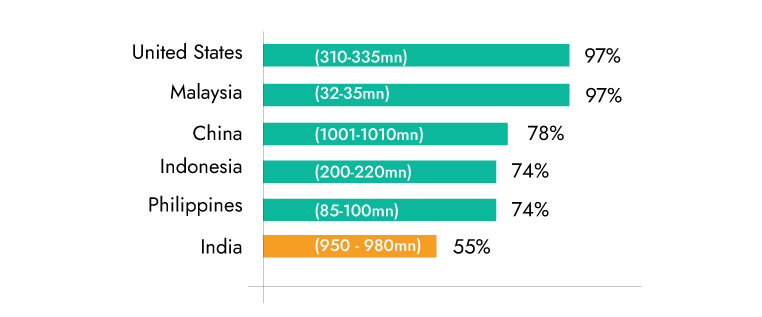
Source: Global Digital Insights 2024 report, Statista, Redseers, TRAI Annual Report 2023-24, Ambit Asset Management
Exhibit 2: Smartphone users/penetration across geographies
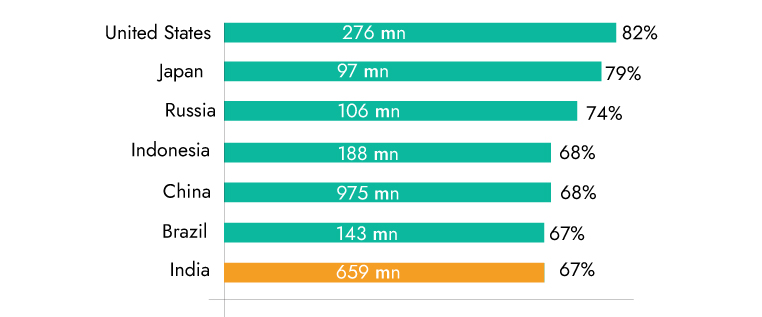
Sources: https://explodingtopics.com/blog/smartphone-stats, Newzoo, Quartz, PewResearch, Ambit Asset Management
India Stack: A Game Changer in Business Dynamics
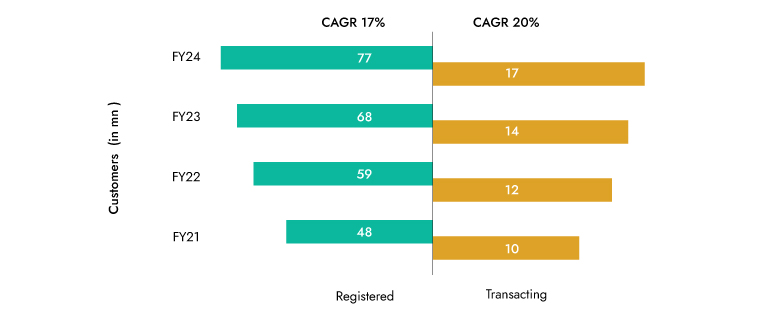
India’s digital economy is poised to reach USD 1tn by 2030, propelled by accelerated digital adoption, robust investments in technology by businesses, and digital democratization. Currently valued at USD 325bn (IBEF May 2024), India’s internet-based economy is on a transformative growth trajectory, affecting sectors such as e-commerce, fin-tech, online retail, gaming, and travel. E-commerce, a key driver, has witnessed exponential growth as the number of average transacting users grew from 95mn in 2018 to 350mn in 2024, achieving a CAGR of 18%. This momentum underscores India's rapid digital evolution and its potential for further expansion across sectors.
Exhibit 3: Major consumer internet sectors to grow strongly
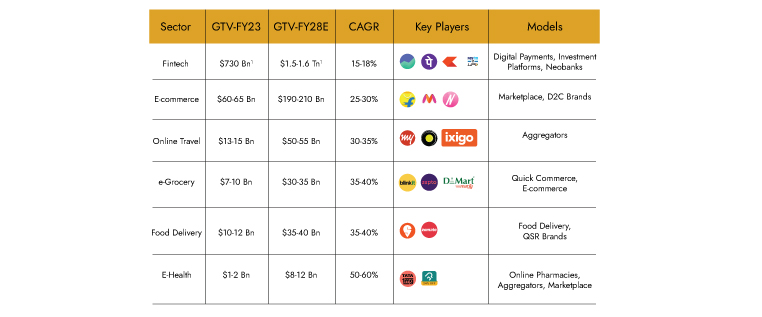
Source: Global Digital Insights 2024 report, Statista, Redseers,TRAI Annual Report 2023-24, Ambit Asset Management
Accelerating growth through Digital Public Infrastructure
Governments in emerging markets have increasingly recognized the transformative potential of building a holistic Digital Public Infrastructure (DPI) ecosystem. A well-structured DPI typically comprises three core layers: digital identification, payments, and data exchange.
Exhibit 4: Backbone of India’s $1Trn digital economy journey
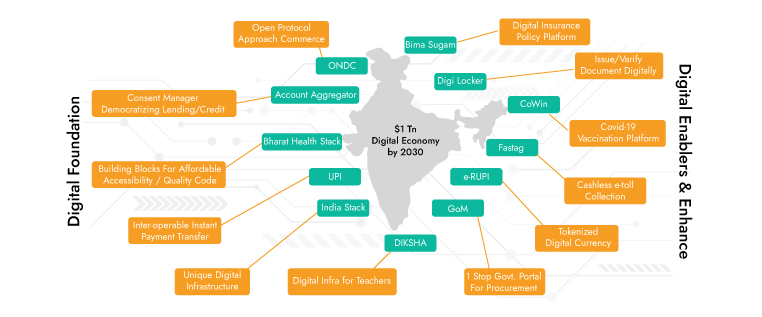
Source: Ambit Asset Management
Real-time payments (RTP) systems now implemented in over 70 countries but show varied impact. In many cases, entrenched alternatives and missing DPI elements, such as directory services, hinder growth. Conversely, in India, market with a comprehensive DPI framework, has seen RTP thrive. India's monthly real-time payments soared from 2.6bn to 13.3bn in three years, driven by innovations like alias directories and QR code integration, enhancing ease of use. DPI success relies on active government participation with its clear vision and interoperable standards to enable innovation. Fully integrated digital identity, directory services, and supporting functionalities have helped unlock DPI's potential.
Exhibit 5: Comprehensive multi-layered DPI framework
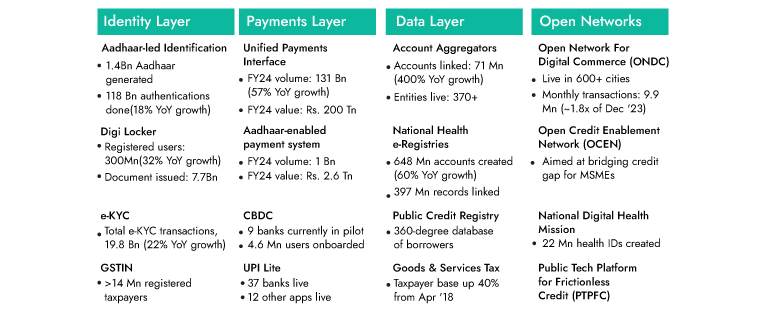
Till Jan '24. All data as latest available on the respective websites captured in June 2024.
Source: India Stack, Press Releases, BCG Analysis, Ambit Asset Management
2. Changing consumer behaviour
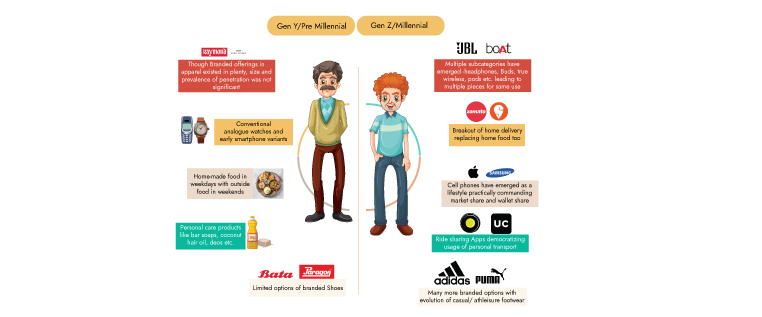
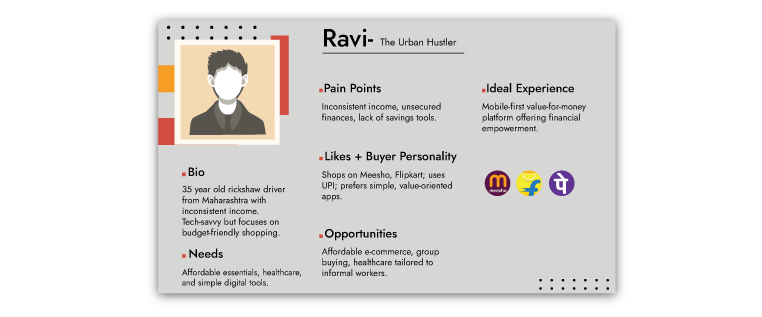
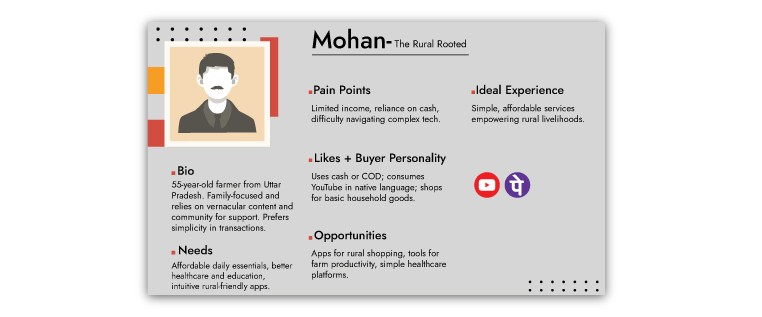
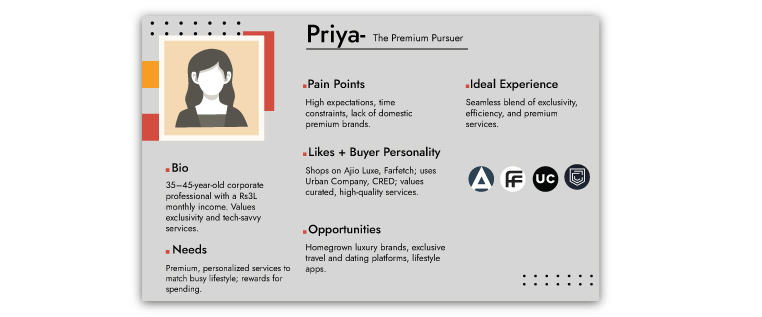
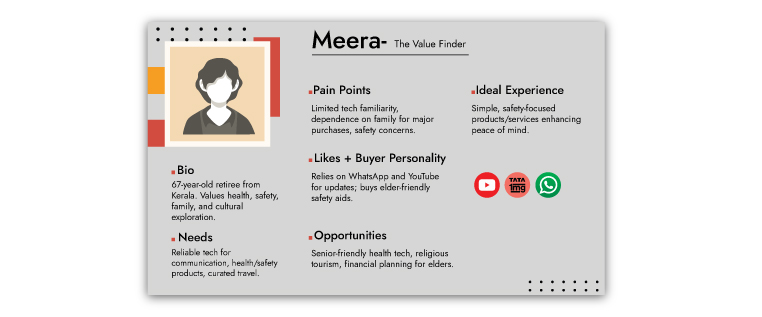
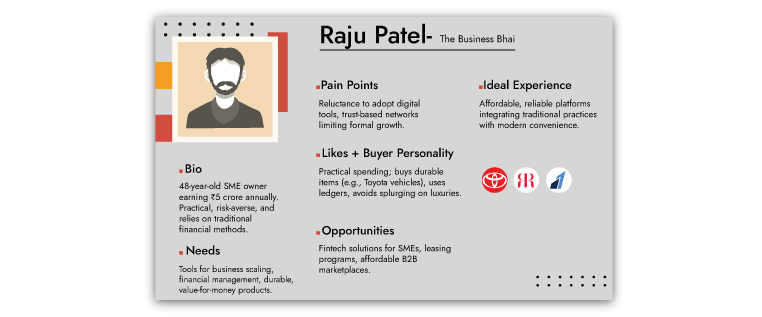
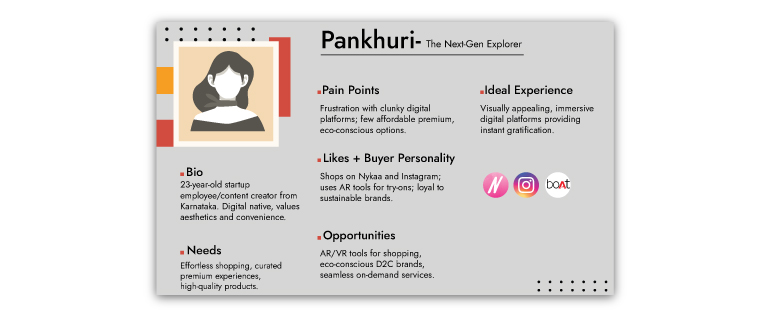
The success story of Digital India extends far beyond India Stack, and thereby led business transformations. While businesses have revolutionized how we perceive and manage money, other startups have reimagined its application, transforming our lifestyles in the process.
Source: Company website, Ambit Asset Management
Source: Company website, Ambit Asset Management
Source: Company website, Ambit Asset Management
Source: Company website, Ambit Asset Management
Source: Company website, Ambit Asset Management
Source: Company website, Ambit Asset Management
Source: Company website, Ambit Asset Management
3. Evolving business models amidst digital revolution
India’s digital revolution is rewriting the rules of business and consumer engagement at an unprecedented pace. While there have been many new-age businesses using tech, there have been many
instances of incumbents which have successfully adopted digital transformation in their models following the Buy or Build philosophy while navigating the winds of change. Banking, insurance and retail have led the adoption to digital transformation alongside fintechs and startups emerging as disruptors.
New-age business: PB Fintech
PB Fintech is the powerhouse behind the renowned fintech marketplaces, Policy Bazaar and Paisa Bazaar. Policybazaar dominates the online insurance marketplace with a 90% market share, leveraging its
early-mover advantage, significant brand investments, robust technology, and data-driven insights. While fintech generally struggles with low entry barriers, Policybazaar's strong market position and customer trust remain unmatched. Paisabazaar complements this by redefining retail lending as a one-stop credit marketplace. Unlike broader digital players like Nykaa or Myntra, Policybazaar has no equal in its niche, though its focus limits scalability akin to financial super-apps. To leave no scope of competition to come in, Policybazaar is expanding offline, blending online convenience with high-touch engagement for categories like traditional savings and health insurance.
Exhibit 6: Leading customer destination
Source: Company, Ambit Asset Management
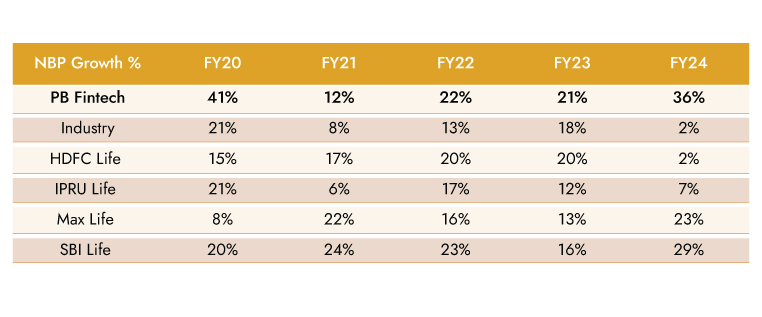
Exhibit 7: Ability to command faster than industry premium growth
Source: Company, Ambit Asset Management
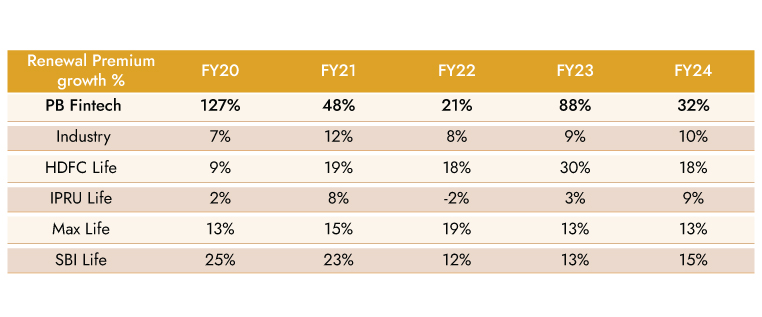
Exhibit 8: Hi tech model enables low cost, easy and faster renewals
Source: Company, Ambit Asset Management
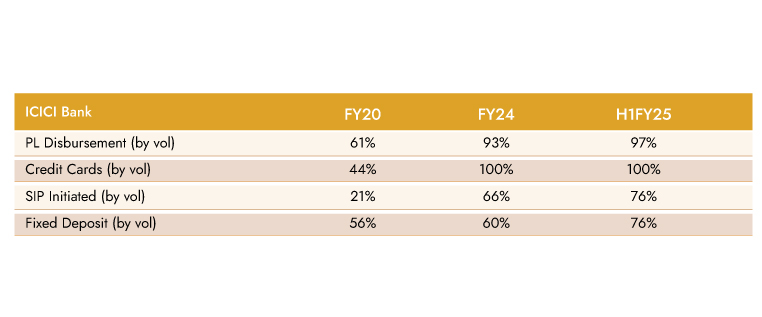
In this race for relevance, some businesses have risen to the challenge, pioneering tech-led transformations that go beyond incremental improvements. They’ve seamlessly integrated innovation into their DNA, setting themselves apart as leaders in this new digital normal. Benefit of the same is seen in ICICI Bank’s improvement in managing volumes, thus commanding strong leadership.
Buy and Build: Titan
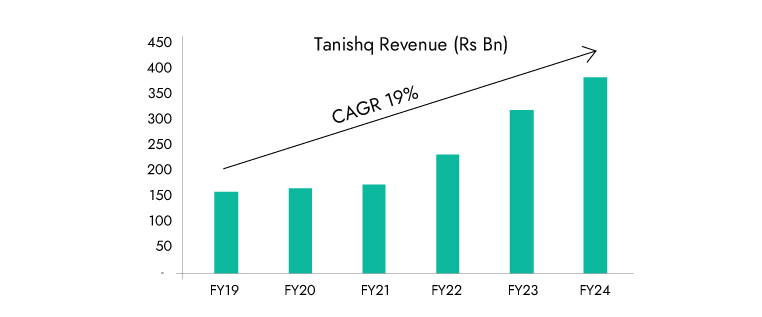
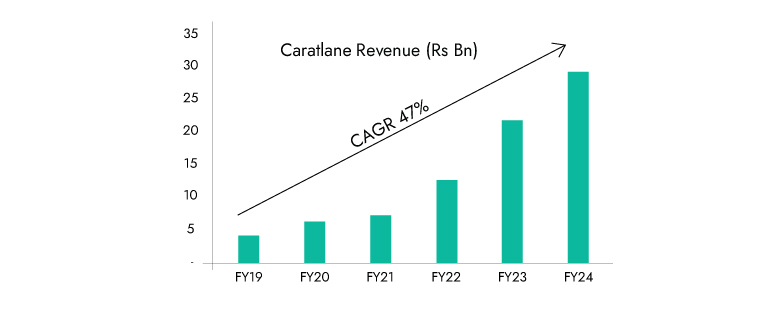
In its journey of digital adoption, Titan has strategically evolved to cater to the preferences of the new-age generation, particularly working women and those favoring lightweight jewelry. Recognizing the shift in consumer behavior, Titan made a pivotal move in 2016 by investing in CaratLane, a brand specializing in the manufacturing and retailing of jewelry products with a strong online presence. By 2024, Titan fully acquired CaratLane, transforming it into a wholly owned subsidiary. This acquisition has propelled Titan's digital footprint, enabling it to tap into the fast-growing e-commerce jewelry market. The growth trajectory of CaratLane has been remarkable, consistently outperforming industry benchmarks. Through its innovative approach, CaratLane has not only expanded Titan's reach but also set new standards in blending traditional craftsmanship with modern retail technology, underscoring Titan's commitment to adapting to the digital era.
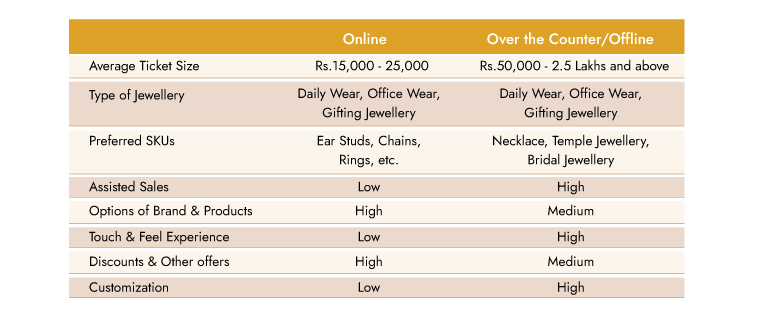
Exhibit 9:Comparison of online vs over the counter sales
Source: Company, Ambit Asset Management
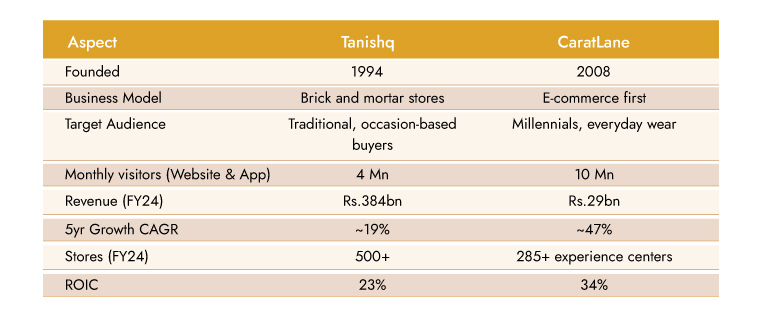
Exhibit 10: Key highlights
Source: Company, Ambit Asset Management
Exhibit 11: Tanishq grew 19% CAGR in last 5 year
Source: Company, Ambit Asset Management
Exhibit 12: Caratlane grew 47% CAGR in last 5 year
Source: Company, Ambit Asset Management
Build: ICICI Bank
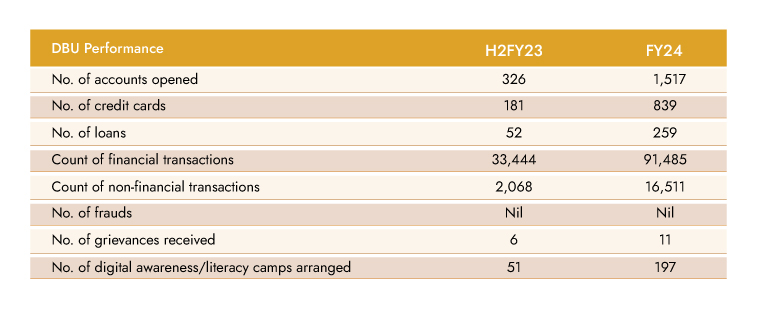
ICICI Bank's commitment to digital transformation and innovation has positioned it as a leader in the Indian banking sector, continually enhancing its services to meet the evolving needs of its customers. ICICI Bank stands out as a leader in digital transformation with itscomprehensive ICICI Stack for retail, business banking, and corporate customers. By offering tailored solutions across accounts, payments, loans, care, and growth layers, the bank seamlessly integrates technology to address specific financial needs. From InstaSave and UPI for individuals to API integration and supply chain lending for businesses, ICICI Stack empowers users with speed, convenience, and innovation. This robust digital infrastructure highlights ICICI Bank’s commitment to redefining customer experience and
driving financial inclusion in the evolving digital economy.
Exhibit 13: Strong performance of IBank’s DBU (in ‘000s):
Source: Company, Ambit Asset Management
The bank has led banking innovation with numerous industry-firsts. It introduced Cardless EMI for seamless purchases, Money Coach for automated investment advice, and paperless KYC for mutual funds. The bank also pioneered voice-based fund transfers, instant digital credit of up to Rs 20,000, and unique cash acceptor machines that authenticate and credit cash in real-time.
Exhibit 14: ICICI bank witnessing robust volumes digitally
Source: Company, Ambit Asset Management
Emergence of E- commerce: Incumbents getting disrupted
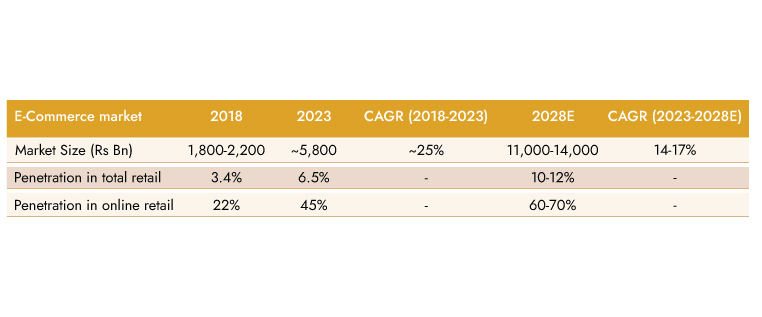
E- Commerce is growing faster than Modern Trade (MT) and General Trade (GT) in India, driven by digital advancements, consumer demand for speed, and low organized grocery penetration. With its promise of 10–30-minute deliveries, tech-enabled operations, and hyperlocal strategies, E-commerce is transforming urban retail. It surged from a 3.4% share in online retail in 2018 to 6.5% in 2023 and is expected to grow 14-17% annually, reaching a market size of INR 11,000–14,000 Bn by 2028. This rapid rise, fueled by digital adoption and pandemic-induced shifts, highlights E-Commerce’s dominance in reshaping India’s retail ecosystem.
Exhibit 15: E- Commerce registering strong growth
Source: Company, Ambit Asset Management
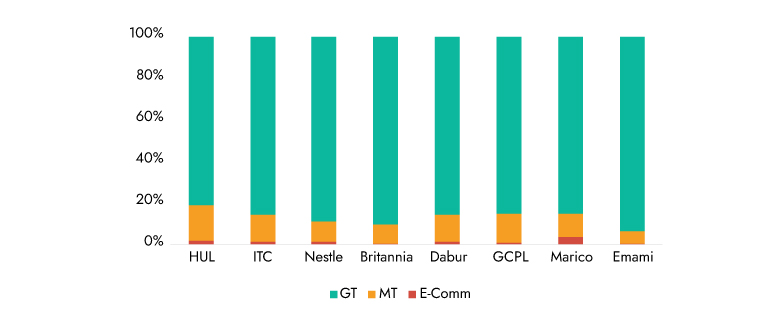
Exhibit 16: Distribution channel mix in FMCG players in 2019
Source: Company, Ambit Asset Management
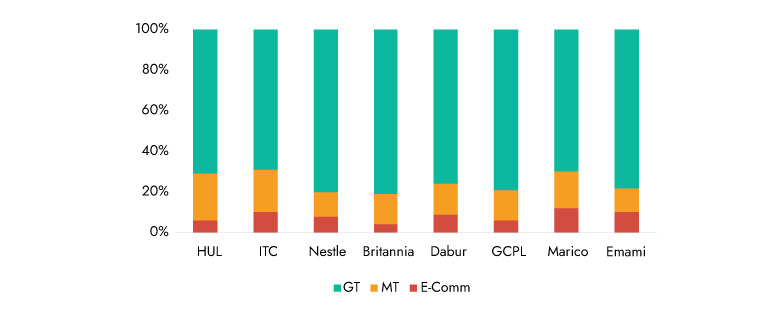
Exhibit 17: Distribution channel mix in FMCG players in 2024
Source: Company, Ambit Asset Management
The rise of e-commerce and quick-commerce platforms in India has reshaped the retail landscape, with modern trade players adopting online delivery to stay competitive. However, they lag in fully embracing this shift, allowing e-commerce platforms to capture significant market share. FMCG companies are losing their dominance in traditional general trade networks as consumers gain access to a broader range of brands and choices online. Modern trade platforms have leveraged their inventory and cost-efficiency to meet the growing demand for online grocery delivery, while e-commerce, with hyperlocal focus and rapid delivery models, dominates urban micro-markets.
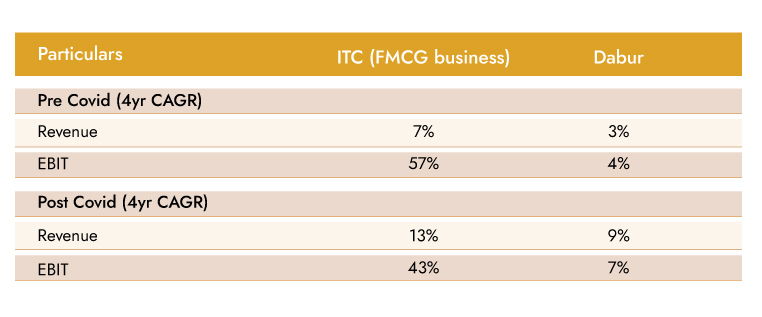
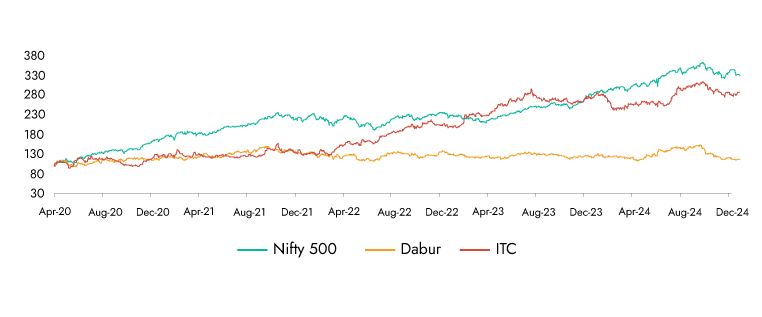
During the COVID-19 pandemic, Dabur, a leading FMCG company, lagged in digital transformation, losing ground to ITC. While Dabur was slow to adopt e-commerce, ITC capitalized on the surge in online shopping with robust digital marketing, influencer campaigns, and an Omni channel sales model. ITC’s integration of physical and digital sales, along with advanced supply chain tools, ensured continuity during lockdowns and met rising demand for health products. In contrast, Dabur’s reliance on physical retail and traditional marketing resulted in missed opportunities, allowing ITC to gain market share, revenue growth, and stronger brand perception among younger consumers.
Exhibit 18: E- Commerce registering strong growth
Source: Company, Ambit Asset Management
ITC’s strong digital adoption and agile strategy boosted its stock performance during the pandemic, while Dabur’s slower digital transition and reliance on traditional retail led to weaker results and missed opportunities.
Exhibit 19: NIFTY's movement with ITC and Dabur's stock performance
Source: Company, Ambit Asset Management
4. Rising investor acceptance of New-Age Businesses
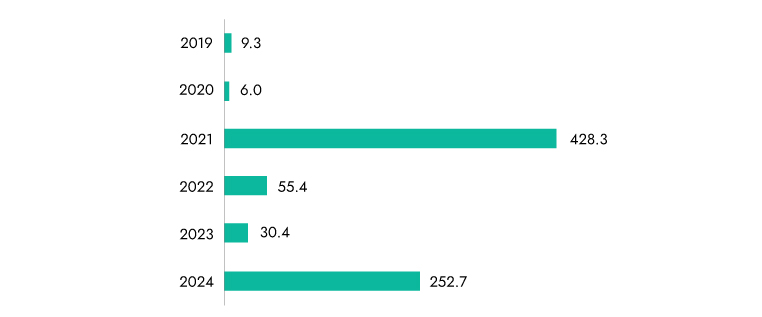
New-age businesses in India are witnessing greater acceptance from public market investors, driven by a noticeable improvement over the past few years. These companies, often characterized by innovative business models and technology-driven solutions, have shifted focus from aggressive growth at all costs to sustainableoperations and clear profitability metrics. As a result,investor confidence has grown, with many now seeing these businesses as viable investment opportunities. This trend is further supported by the increasing number of such companies successfully listing on Indian stock exchanges, signaling their maturity and readiness to scale in a competitive market.
Exhibit 20: New age tech IPO mop-up (Rs. Bn)
Source: Company, Ambit Asset Management
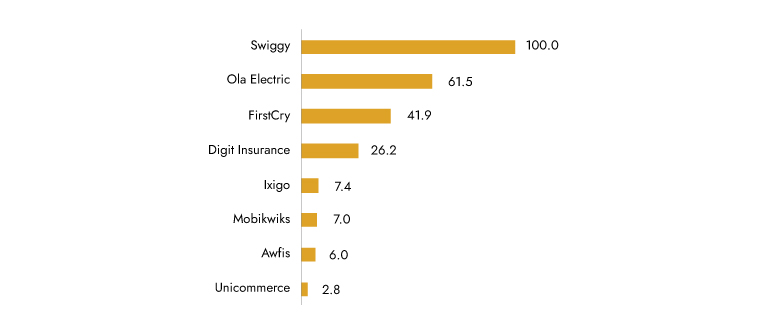
Exhibit 21: Top IPOs in this segment in CY24 (Rs. Bn)
Source: Company, Ambit Asset Management
Exhibit 22:Performance of select new-age tech companies post IPO
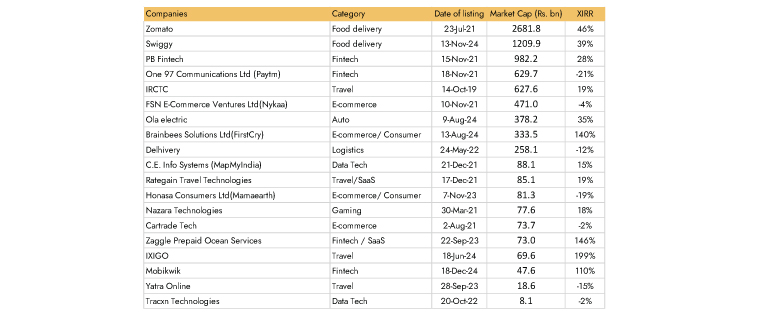
Note: Market Cap and XIRR as on 31st Dec ‘24
Source: Company, Ambit Asset Management
India’s digital revolution is rewriting the rules of business and consumer engagement at an unprecedented pace. As technology becomes the lifeblood of growth, businesses now face an unforgiving mandate: buy, build, or perish. Those with pricing power, strong operating cash flows, and agility to adapt to relentless change will thrive, while others risk fading into irrelevance. Scaling sustainably, fostering innovation, and delivering consistent value in a rapidly evolving market will separate the disruptors from the disrupted. The winners will not only adapt but also proactively shape the future, building ecosystems that combine resilience, foresight, and execution.
As the next chapter of Digital India unfolds, the question is not whether change will come—it is who will lead it. In a world of many a possibilities, the stakes have never been higher; the rewards never more transformative! At Ambit Asset Management, across our portfolios we have embraced the digital wave by investing in several successful adopters and disruptors.
Reflection on our Portfolios for the year gone by
CY24: A Tale of Two Halves
The Indian stock market in 2024 presented a bifurcated landscape. The first half witnessed a surge in optimism, driven by robust corporate earnings, a favorable macroeconomic backdrop, and a strong performance by domestic institutions. Key sectors like IT and financials led the charge, with investor sentiment buoyed by expectations of continued economic growth. However, the second half brought a shift in sentiment. Global headwinds, including rising interest rates and geopolitical uncertainties, began to weigh on investor confidence. This, coupled with a mixed earnings season and concerns about domestic economic growth, led to increased volatility and a more cautious approach from investors. While some sectors out performed, others faced significant challenges. This two-fold narrative highlights the dynamic nature of the Indian stock market and the importance of navigating evolving market conditions. Market have moved from valuing the vision to show me to numbers. Over the past six months, numbers over narrative has taken precedence. At Ambit Asset Management our philosophy to invest business that demonstrates superior execution backed with able leadership, strong financials & good governance yielded more hits than misses. See below few ideas that worked for us and few that didn't in the year gone by.
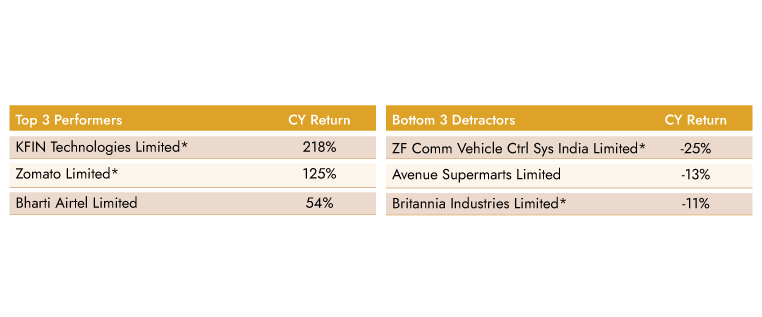
Source: Comapny Report, Ambit Asset Management
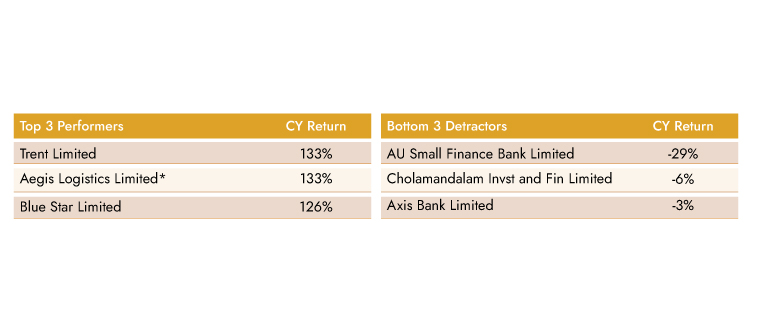
Source: Comapny Report,Ambit Asset Management
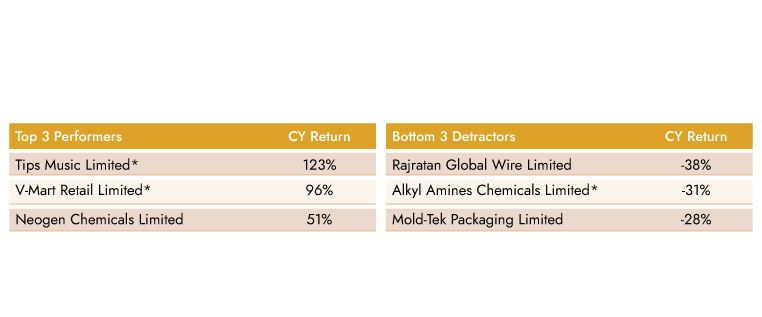
Source: Comapny Report, Ambit Asset Management
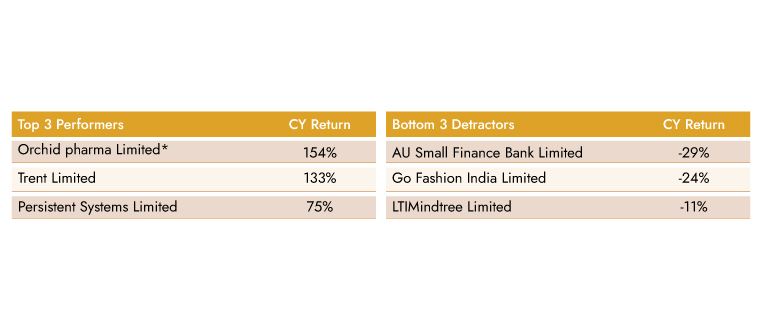
Source: Comapny Report, Ambit Asset Management *Invested during the year 2024
AMBIT COFFEE CAN PORTFOLIO
At Coffee Can Portfolio, we do not attempt to time commodity/investment cycles or political outcomes and prefer resilient franchises in the retail and consumption-oriented sectors. The Coffee Can philosophy has an unwavering commitment to companies that have consistently sustained their competitive advantages in core businesses despite being faced with disruptions at regular intervals. As the industry evolves or is faced with disruptions, these competitive advantages enable such companies to grow their market shares and deliver long-term earnings growth.
Exhibit 23: Ambit’s Coffee Can Portfolio point-to-point performance
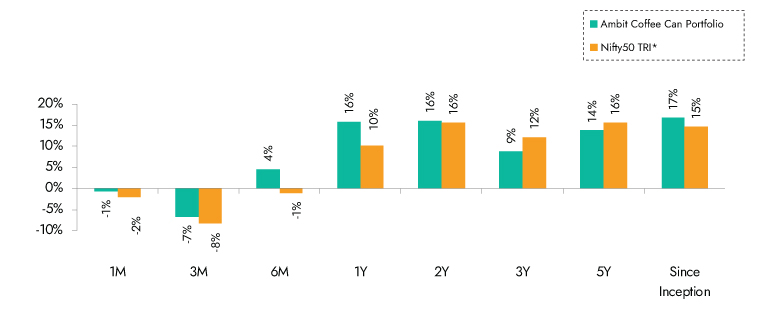
Source: Ambit Coffee Can Portfolio inception date is Mar 06, 2017; **1M Return: 1st - 31st Dec'24; 3M Return: 1st Oct'24 – 31st Dec'24; 6M Return: 1st Jul'24 – 31st Dec'24; 1Y Return: 1st Jan'24 – 31st Dec'24*Nifty 50 TRI is the selected benchmark for the Ambit Coffee Can Portfolio. The same is reported to SEBI.
Exhibit 24: Ambit’s Coffee Can Portfolio calendar year performance
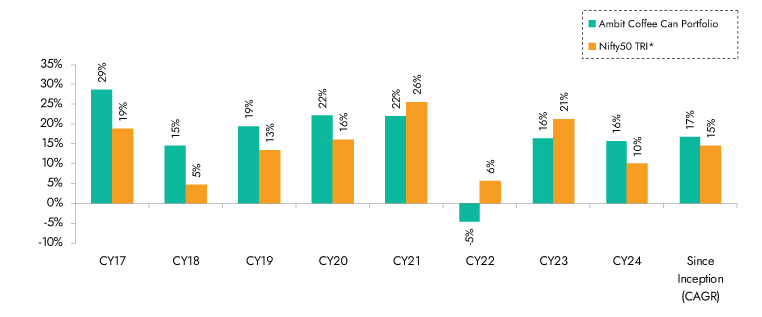
Ambit Coffee Can Portfolio inception date is Mar 06, 2017; *Nifty 50 TRI is the selected benchmark for the Ambit Coffee Can Portfolio. The same is reported to SEBI.
Ambit Good & Clean Midcap Portfolio
Ambit's Good & Clean strategy provides long-only equity exposure to Indian businesses that have an impeccable track record of clean accounting, good governance, and efficient capital allocation. Ambit’s proprietary ‘forensic accounting’ framework helps weed out firms with poor quality accounts, while our proprietary ‘greatness’ framework helps identify efficient capital allocators with a holistic approach for consistent growth. Our focus has been to deliver superior risk-adjusted returns with as much focus on lower portfolio drawdown as on return generation. Some salient features of the Good & Clean strategy are as follows:
- Process-oriented approach to investing: Typically starting at the largest 500 Indian companies, Ambit's proprietary frameworks for assessing accounting quality and efficacy of capital allocation help narrow down the investible universe to a much smaller subset. This shorter universe is then evaluated on bottom-up fundamentals to create a concentrated portfolio of no more than 20 companies at any time.
- Long-term horizon and low churn: Our holding horizons for investee companies are 3-5 years and even longer with annual churn not exceeding 20-25% in a year. The long-term orientation essentially means investing in companies that have the potential to sustainably compound earnings, with these compounding earnings acting as the primary driver of investment returns over long periods.
- Low drawdowns: The focus on clean accounting and governance, prudent capital allocation, and structural earnings compounding allow participation in long-term return generation while also ensuring low drawdowns in periods of equity market declines.
Exhibit 25: Ambit’s Good & Clean Midcap Portfolio point-to-point performance
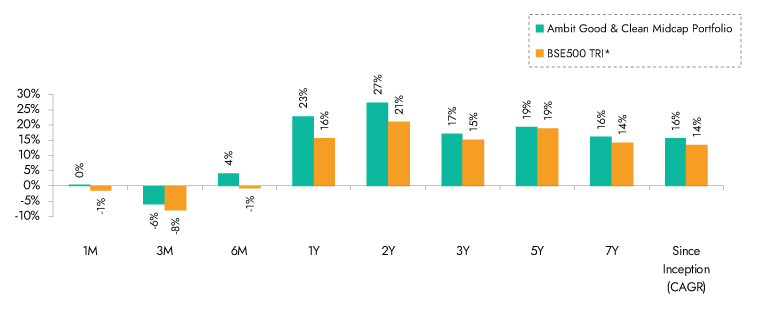
Source: Ambit Good & Clean Mid cap Portfolio inception date is Mar 12, 2015;**1M Return: 1st - 31st Dec'24; 3M Return: 1st Oct'24 – 31st Dec'24; 6M Return: 1st Jul'24 – 31st Dec'24; 1Y Return: 1st Jan'24 – 31st Dec'24 *BSE 500 TRI is the selected benchmark for the Ambit Good & Clean Mid cap. The same is reported to SEBI.
Exhibit 26: Ambit’s Good & Clean Midcap Portfolio calendar year performance
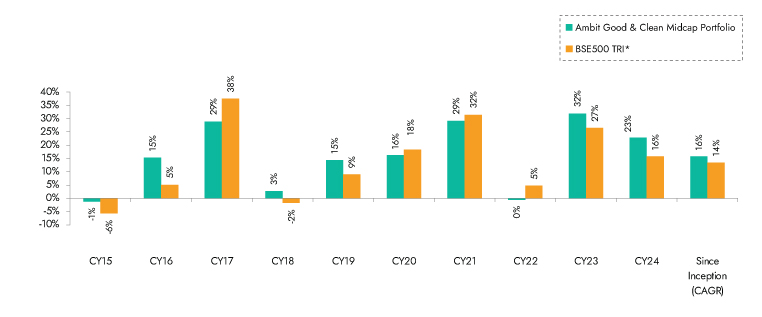
Ambit Good & Clean Mid cap Portfolio inception date is Mar 12, 2015; *BSE 500 50 TRI is the selected benchmark for the Ambit Good & Clean Mid cap. The same is reported to SEBI.
Ambit Emerging Giants Small Cap Portfolio
Small caps with secular growth, superior return ratios and no leverage are the essence of Ambit's Emerging Giants portfolio. The portfolio aims to invest in small-cap companies with market-dominating franchises and a track record of clean accounting, governance and capital allocation. The fund typically invests in companies with market caps less than INR 10,000 cr. These companies have excellent financial track records, superior underlying fundamentals (high RoCE, low debt), and the ability to deliver healthy earnings growth over long periods of time. However, given their smaller sizes, these companies are not well discovered, owing to lower institutional holdings and lower analyst coverage. Rigorous framework-based screening coupled with extensive bottom-up due diligence led us to a concentrated portfolio of 18-20 emerging giants.
Exhibit 27: Ambit Emerging Giants Portfolio point-to-point performance
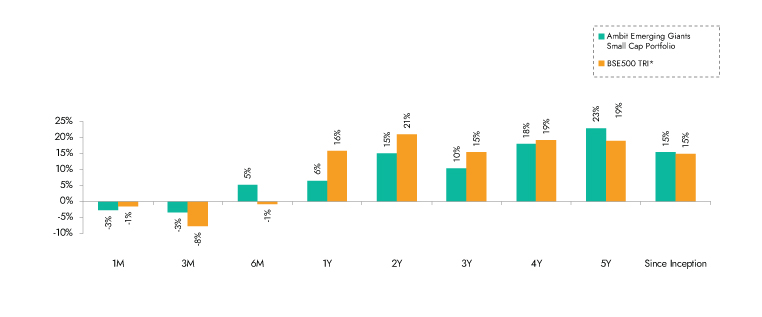
Source: Ambit Emerging Giants Small cap Portfolio inception date is Dec 1, 2017;**1M Return: 1st - 31st Dec'24; 3M Return: 1st Oct'24 – 31st Dec'24; 6M Return: 1st Jul'24 – 31st Dec'24; 1Y Return: 1st Jan'24 – 31st Dec'24*BSE 500 TRI is the selected benchmark for the Ambit Emerging Giants Small cap. The same is reported to SEBI.
Exhibit 28: Ambit Emerging Giants Portfolio calendar year performance
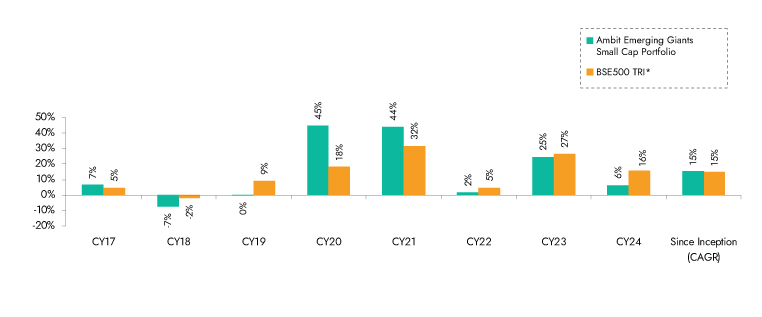
Source: Ambit Emerging Giants Small cap Portfolio inception date is Dec 1, 2017; *BSE 500 TRI is the selected benchmark for the Ambit Emerging Giants Small cap. The same is reported to SEBI.
Ambit TenX Portfolio
Ambit TenX Portfolio allows investors to participate in the India growth story as the Indian GDP heads towards a US $10 tn mark over the next 12-15 years. Medium and smaller corporates are expected to be the key beneficiaries of this growth. The portfolio intends to capitalize on this opportunity by identifying and investing in primarily mid & small cap companies that can grow their earnings 10x over the same period implying 18-21% CAGR.
Key features of this portfolio would be as follows:
- Longer-term approach with a concentrated portfolio: Ideal investment duration of more than five years with 15-20 stocks.
- Key driving factors: Low penetration, strong leadership and light balance sheet
- Forward-looking approach: Relying less on historical performance and more on future potential while not deviating away from the Good & Clean philosophy.
Exhibit 29: Ambit TenX Portfolio point-to-point performance
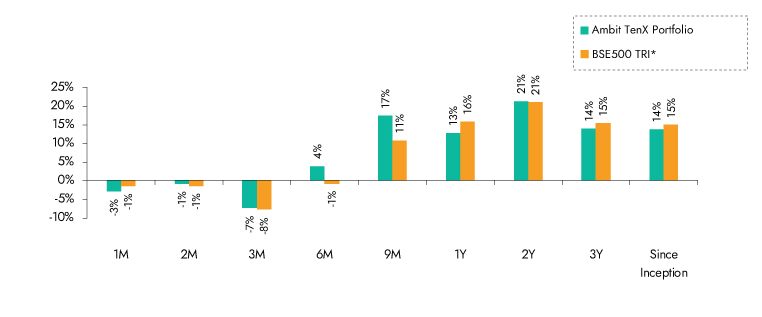
Source: Ambit TenX Portfolio inception date is Dec 13, 2021;**1M Return: 1st - 31st Dec'24; 3M Return: 1st Oct'24 – 31st Dec'24; 6M Return: 1st Jul'24 – 31st Dec'24; 1Y Return: 1st Jan'24 – 31st Dec'24 *BSE 500 TRI is the selected benchmark for the Ambit Emerging Giants Small cap. The same is reported to SEBI.
Exhibit 30: Ambit TenX Portfolio calendar year performance
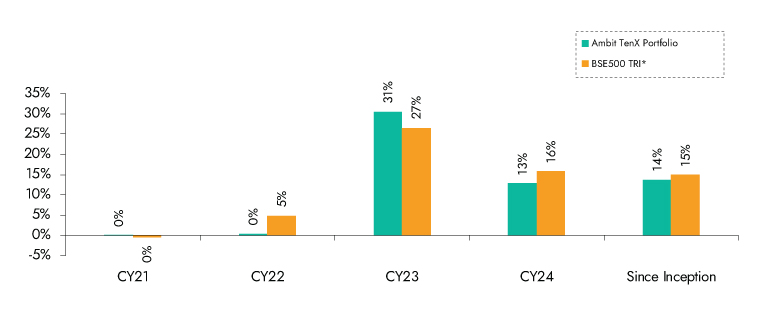
Ambit TenX Portfolio inception date is Dec 13, 2021; *BSE 500 TRI is the selected benchmark for the Ambit TenX Portfolio. The same is reported to SEBI.
Ambit Micro Marvels Portfolio
We aim to create a portfolio that invests predominantly in micro-cap companies with the potential of delivering superior earnings growth and generating relatively better risk-adjusted performance over a long period of time.
Ambit’s proprietary ‘forensic accounting’ framework helps weed out firms with poor quality accounts while our proprietary ‘greatness’ framework helps identify efficient capital allocators. The result is a concentrated portfolio of 20-25 stocks that draws down less than the market in corrections and has low churn.
Key Features of Portfolio Companies:
1. High earnings growth companies with low leverage,
2. Market leaders or challengers with strong moat around brand, distribution, technology, and innovation,
3. Strong corporate governance coupled with apt capital allocation.
Exhibit 31: Ambit Micro Marvels Portfolio point to point performance
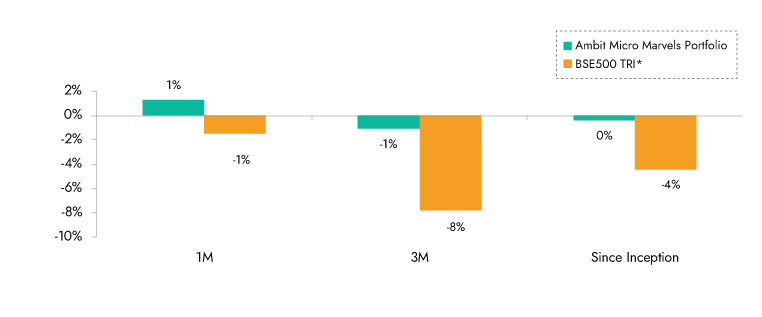
Source: Ambit Micro Marvels Portfolio inception date is Jul 29, 2024;
*BSE 500 TRI is the selected benchmark for the Ambit Micro Marvels Portfolio. The same is reported to SEBI.